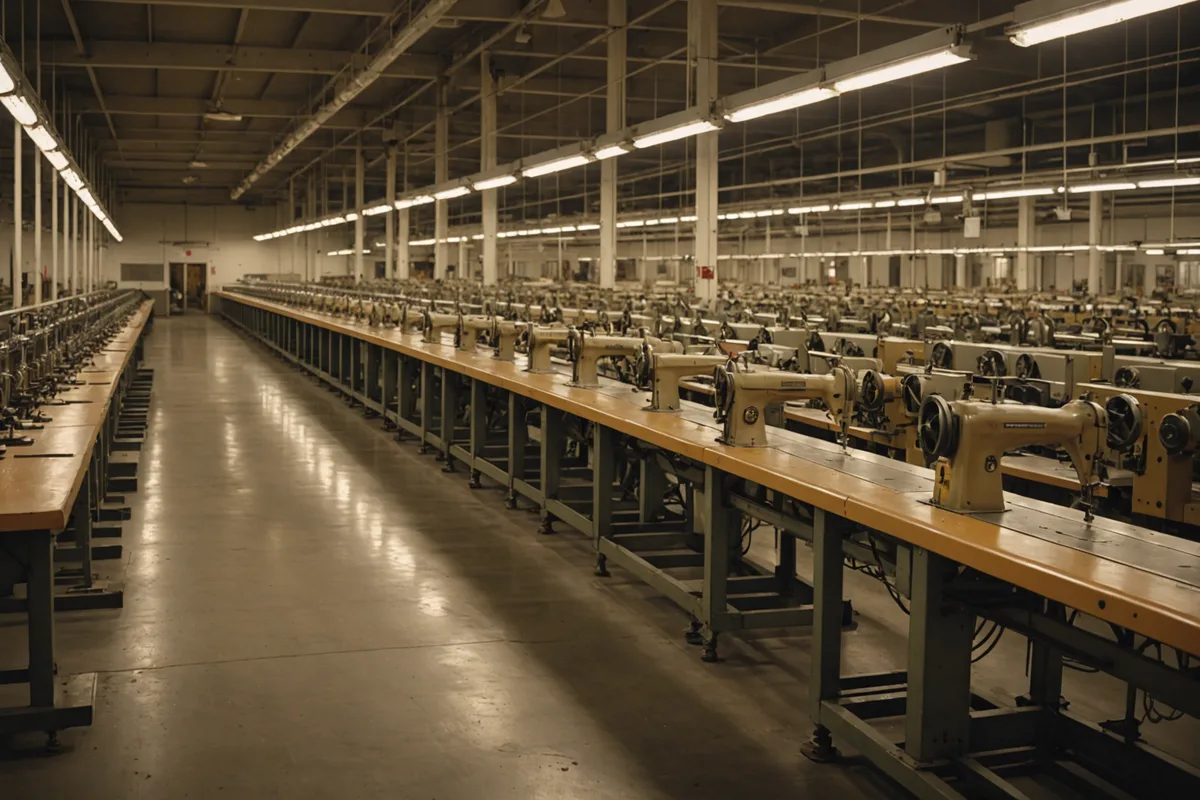
It is Thursday morning, and a production coordinator has to decide whether to book airfreight for an order due to leave Indonesia the following week. The forwarder needs an answer before the afternoon cutoff. Sea freight is cheaper, but only if the goods will be ready on the date the factory indicated.
The coordinator has sent a WhatsApp message asking for a confirmed finishing date. The factory has seen it but has not replied. Without that answer, the freight decision waits. So does the retailer allocation notice, the internal cash forecast, and the decision about whether to place an inventory top-up.
Nothing dramatic has happened. No shipment has been cancelled. No production line has stopped. But a set of decisions has been placed on hold because one status update is sitting inside a conversation.
The visible task is messaging. The real cost is waiting.
In apparel production, chasing an update often looks like a small task. A coordinator sends a message, follows up later, reads a reply, and updates a spreadsheet or internal note. Across several orders, however, these small tasks become a recurring part of the week.
Consider a coordinator managing nine active purchase orders across four factories. On Monday, they ask for cutting progress on one order, fabric arrival on another, and a revised ship date for a third. On Tuesday, two factories reply with partial information. One says production is on track. Another says the order is “almost ready.” The coordinator asks what “almost ready” means, and whether packing and inspection are included.
By Wednesday, three more orders require follow-up. A message sent in the morning may not receive a response until late afternoon. A reply may answer one question but leave another open. The coordinator then searches through older messages to find the last confirmed quantity, shipment estimate, or promised completion date.
By Friday, the work has included dozens of messages, several reminders, and a series of manual updates in other places. The time spent typing is only part of the cost. The larger cost is the attention required to maintain a working picture of nine orders from fragments of conversation.
This is familiar work for anyone who has managed multi-factory order runs. The coordinator is not only collecting information. They are deciding which information is reliable, which date has changed, and which unresolved answer is now urgent.
Decisions get deferred while the thread stays open
A production update matters because it supports another decision. When the update is late or unclear, that decision is delayed as well.
Inventory top-ups
A brand may be considering an additional fabric order or a second production run. The timing depends partly on the current order. If the first order is on track, the brand may have enough stock arriving to wait. If it is delayed, the additional order may become more urgent. If the factory is already behind, adding volume may create another capacity problem.
Until the coordinator has a credible view of cutting, sewing, finishing, and packing, the brand cannot confidently choose between those options. The cost is not just the few minutes spent requesting an update. It is the planning window that narrows while the decision remains open.
Retailer commitments
A brand supplying retailers may need to confirm how many units can be allocated to a particular delivery window. That commitment can affect purchase orders, promotions, warehouse planning, and the retailer relationship.
A message saying that goods are “nearly done” is not enough to support that decision. The brand needs to know which checkpoint has been completed, what remains, and whether the expected ship date is still credible. When the answer arrives late, the retailer may receive a cautious response, a reduced allocation, or a commitment made with too little confidence.
Logistics booking
Freight planning has its own deadlines. Airfreight and sea freight have different costs, transit times, and booking requirements. Forwarders need a reasonable estimate of cargo readiness, not just a general sense that production is progressing.
If a coordinator is waiting for confirmation, a cheaper sailing may be missed. The brand may book airfreight as insurance, or hold the booking and risk losing space. Either choice can be more expensive than the original message suggests.
WhatsApp creates conversational memory, not an audit trail
WhatsApp is good at carrying a conversation forward. It is much less useful as a record of production events.
In a chat thread, a status update is surrounded by greetings, follow-up questions, photos, revised estimates, voice notes, and messages about unrelated orders. The information may be present, but finding it requires scrolling and remembering what mattered at the time.
An audit trail works differently. It records an event against an order and a checkpoint. The update can show what happened, when it was recorded, and whether it changed a previous expectation. A cutting checkpoint, for example, can carry a timestamp and a status. A finishing delay can be recorded as a separate event rather than buried in a later conversation.
The difference is not cosmetic. In a chat thread, the coordinator has to reconstruct the order history. In an audit trail, the history is already arranged as a sequence of events.
This also changes how patterns can be seen across orders. If several factories regularly report fabric delays, or if finishing dates tend to move after a particular checkpoint, those patterns are difficult to identify from separate conversations. They become more visible when updates are recorded in a consistent structure.
Why factories prefer WhatsApp
It would be wrong to treat factory preference for WhatsApp as careless or irrational. WhatsApp is widely used between brands and Indonesian factories because it is familiar, fast, and already part of daily work. Factory teams can send a photo from the floor, answer from a phone, or clarify a detail without opening another system.
It also supports the relationship side of production. Negotiating a change, discussing a quality concern, explaining a delay, or resolving a practical issue often benefits from an informal conversation. Those exchanges do not need to be forced into a form.
The boundary is important: this is not an argument that WhatsApp is the wrong tool for factory relationship conversations. It is an argument that WhatsApp is the wrong place to store production status data that other decisions depend on.
A transition to structured reporting also has to account for the factory side. It cannot simply ask factory teams to do more administrative work without changing anything else. The required input should be limited to meaningful checkpoints, with clear definitions for terms such as “cutting complete,” “finishing complete,” and “ready to ship.” The process should not require a long report for every small change.
Factories also need a practical way to report exceptions. If fabric has not arrived, if a line is short-staffed, or if a quality issue affects the schedule, the system should allow that context to be recorded alongside the status. A structured record should provide more clarity than a chat message, not remove the explanation that makes the message useful.
What changes when the record is structured
For a brand coordinator, the first change is that fewer decisions depend on memory. The coordinator can see the latest recorded checkpoint, the time it was updated, and what remains unresolved. Follow-up messages can focus on exceptions instead of asking every factory for a general status several times a week.
The second change is that an alert has a reference point. A late checkpoint is not merely a feeling that an order is slipping. It can be compared with the expected date and with the next operational decision. That makes it easier to decide whether to contact the factory, update a retailer, review freight options, or adjust an inventory plan.
The third change is accountability without turning every conversation into a dispute. A timestamped record gives the brand and factory a shared sequence of events. When a date moves, the discussion can focus on when the change occurred and what caused it, rather than on which person remembers the earlier conversation correctly.
That does not remove uncertainty from production. Factories will still face material delays, capacity constraints, quality problems, and changing shipment conditions. A record cannot make those issues disappear. It can make their timing and consequences easier to see.
The hidden cost of chasing updates is therefore not the number of WhatsApp messages. It is the operational space lost while decisions wait for a reply, and the effort required to reconstruct what has already happened.
An audit trail changes that space. It turns production status from conversational memory into a sequence of recorded events, so the next decision can be based on what is known, what changed, and what still needs attention.