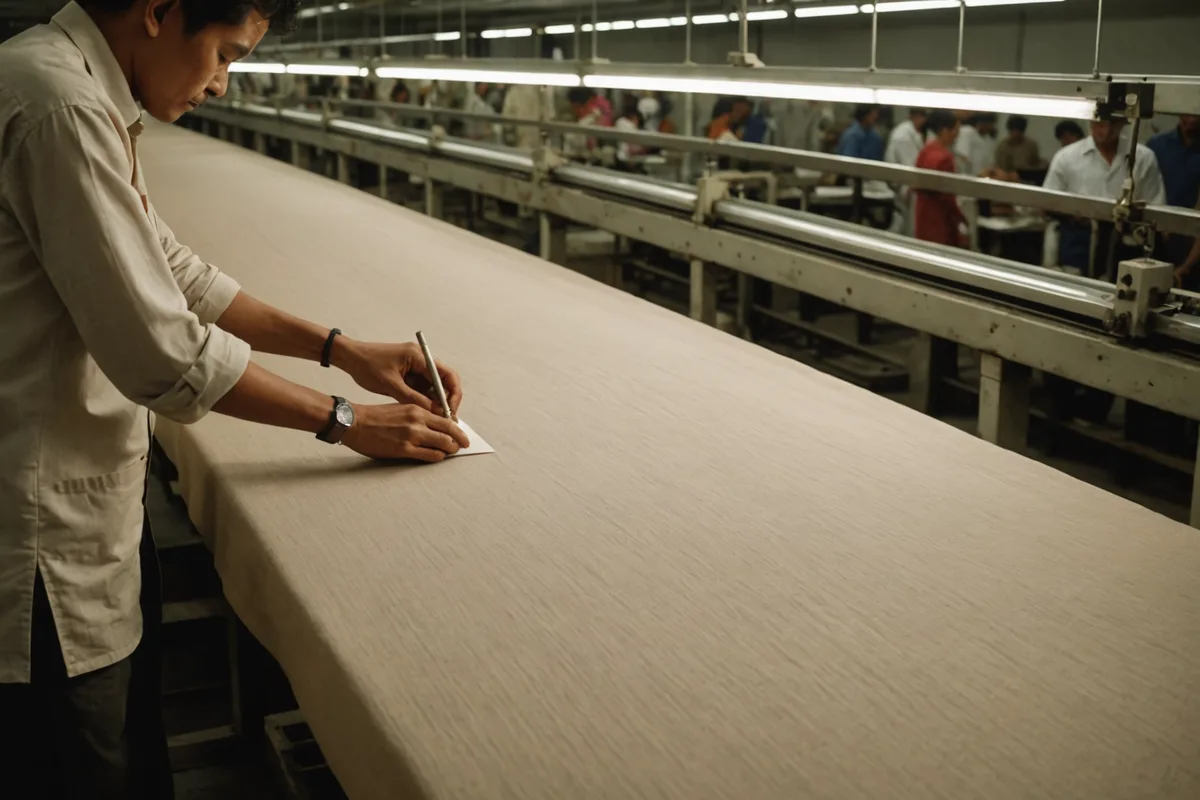
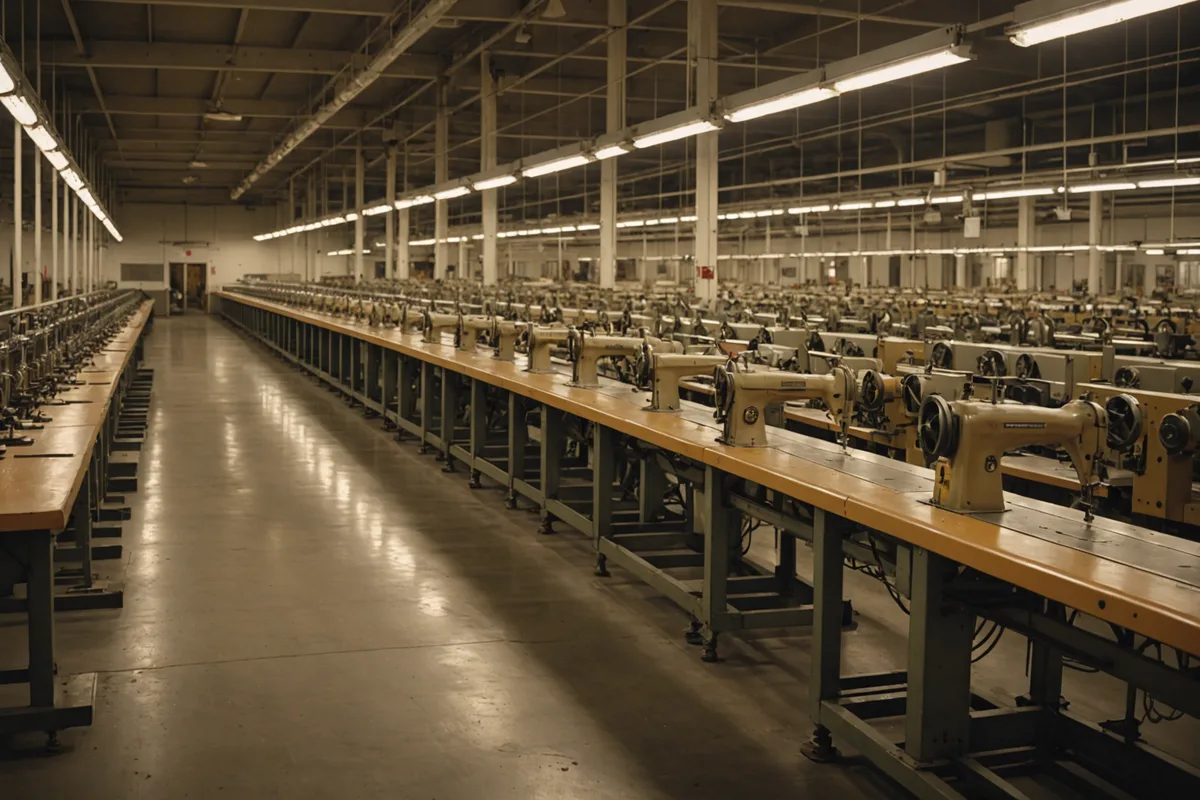
A vague purchase order creates room for a factory and a brand to meet the same written instruction and still produce different outcomes. The cost appears later as a fabric dispute, a missed booking, a rejected shipment, or a production team arguing over what “on time” was supposed to mean.
After reading and working with hundreds of garment purchase orders in West Java, I have found that the serious ambiguity is rarely hidden in the unit price. It sits in the fields that connect product information to factory action: the SKU specification, fabric responsibility, milestone dates, and the consequences of delay.
This article is not about making a PO legally airtight. Contract language needs to be reviewed for the applicable jurisdiction, trade terms, and commercial relationship. The aim here is narrower and more practical: make the PO operationally clear enough that a production manager, merchandiser, fabric buyer, and logistics coordinator will read the same instruction.
1. Build the PO around the SKU, not only the style
A style number is not a complete production instruction. One style can contain several colors, size runs, fabric lots, artwork placements, or packaging variations. The factory needs to know exactly which specifications apply to each sellable unit.
At minimum, the PO should include or clearly reference:
- Style number and SKU or color code
- Quantity by color and size
- Fabric composition, weight, construction, and finish
- Trim, label, print, embroidery, and hardware specifications
- Measurement chart and tolerance table
- Approved sample reference
- Packaging, folding, carton, polybag, and labeling requirements
- Price per unit, currency, payment terms, and applicable trade terms
Do not rely on a folder of attachments with filenames such as “final tech pack” or “updated artwork.” Put the revision number and approval date in the PO, then identify which attachment controls if documents conflict. A factory should not have to decide whether a measurement in a tech pack, a sample comment, or an email is the latest instruction.
For multiple SKUs, use a line-item table rather than one total quantity. A useful row includes the SKU, color, size range, quantity, fabric reference, trim reference, and packaging instruction. If the same style has two fabric weights, they are not one production line simply because the silhouette is identical.
2. State who is responsible for the fabric
Fabric sourcing responsibility is one of the most common causes of avoidable delay. The PO must state whether the order is cut-make-trim, full-package, or based on a nominated mill arrangement.
In a cut-make-trim order, the brand may supply the fabric while the factory handles cutting, sewing, finishing, and packing. In a full-package order, the factory may be responsible for purchasing fabric and managing the mill. With a nominated mill, the factory may place or coordinate the order but have limited control over the mill’s lead time and capacity.
Each structure creates different operational questions. The PO should answer:
- Who places the fabric order?
- Who approves lab dips, strike-offs, and bulk fabric?
- Who pays for testing, inspection, and fabric claims?
- What is the required fabric delivery date to the factory?
- What happens if the nominated mill misses that date?
- Who owns excess fabric, rejected fabric, and usable leftover fabric?
“Fabric by buyer” is not enough. It does not tell the factory whether fabric must arrive at the cutting room, the warehouse, or the nominated mill by a particular date. It also does not establish whether the factory may proceed with partial quantities.
Consider a 10,000-unit order where the PO says the factory is responsible for fabric, but an email says the brand has already nominated a mill. The factory assumes the mill will confirm capacity. The brand assumes the factory is managing the purchase. The mill releases only enough greige fabric for part of the order. Cutting starts late, the sewing line is underloaded, and both sides later describe the delay as someone else’s responsibility. One clear responsibility field and one fabric-in-house date would have exposed the problem earlier.
3. Separate milestone dates from the ship date
A single requested ship date cannot manage a garment order. It is an outcome date, not a production plan. A workable PO includes a milestone schedule that reflects what must happen before goods can leave the factory.
Include dates for:
- Fabric and material delivery to the factory
- Cut start or cut completion
- Sewing completion
- Finishing and internal quality control
- Final buyer or third-party inspection, if required
- Ship-ready date
- Cargo booking deadline
- Confirmed ship date
These dates should have one meaning each. “Cut date” might mean the first day of cutting or the date by which all cutting must be complete. “QC date” might mean the inspection appointment or the date all corrective actions must be closed. Define the obligation in the field label or in a short schedule note.
Ship-ready date and confirmed ship date are not interchangeable. Ship-ready means the factory has completed the goods, passed the required checks, packed the order, and made it available for handover. Confirmed ship date is tied to the logistics booking and the movement of cargo. A factory can meet its ship-ready obligation while a carrier changes the vessel schedule. A factory can also say goods are “shipped” when cartons are still waiting for final packing.
Use both dates and identify the owner of each action. For example, the factory owns ship-ready on 18 June, the logistics coordinator must submit the booking by 20 June, and the confirmed vessel departure is 24 June. If the factory is responsible for booking cargo, state that directly rather than leaving the task in a separate email thread.
Factories read dates according to the work they control. A brand may write “ship 24 June” intending the goods to leave the factory on that day. A factory may read it as the date the shipment should arrive at the forwarder or even at the destination. This difference is routine, not exceptional. Write “goods leave factory,” “cargo delivered to forwarder,” or “vessel departure,” depending on the intended obligation.
4. Write delay and cancellation clauses that operations can apply
A penalty clause is not useful if nobody can determine when the clock starts or what event counts as a delay. The PO should connect the consequence to a defined milestone and state which exceptions apply.
An operationally readable clause might specify that a late-delivery charge applies when finished goods are not ship-ready by the confirmed ship-ready date, excluding delays caused by buyer-supplied materials, late approvals, approved order changes, force majeure events, or carrier changes after factory handover. The exact rate, cap, notice period, and remedy depend on the commercial agreement and should be reviewed legally.
Do not insert a penalty percentage without defining:
- The date against which lateness is measured
- Whether the charge applies to all units or only delayed units
- The maximum amount or duration
- Whether the buyer must issue written notice
- How approved extensions are documented
- Whether the buyer may cancel, reduce quantity, or require expedited freight
Cancellation language also needs an operational trigger. “Buyer may cancel for late delivery” leaves several questions open. How many days late? Is the factory given a cure period? Can the buyer cancel undelayed SKUs while accepting completed units? Who pays for committed fabric, trims, work in progress, and finished goods?
These provisions are common in export garment contracts, but their enforceability varies. The purpose of writing them clearly in the PO is not to replace a contract. It is to ensure that the factory team understands the commercial risk before it accepts the order and that both sides can identify a breach using the same records.
5. Leave room for controlled flexibility
Not every detail can be fixed when a PO is issued. A color approval may still be pending, a carton dimension may depend on final folding tests, or the vessel schedule may not yet be available. That is legitimate flexibility when the open item, owner, and decision date are recorded.
Use a controlled-open-items section with fields such as:
- Open item
- Responsible party
- Required approval date
- Impact if late
- Approved temporary instruction, if any
For example, “bulk shade approval pending, buyer approval due 5 May, factory may proceed with cutting only after approval” is clear. “Color to be confirmed” is not. The first statement preserves flexibility while protecting the production sequence. The second transfers uncertainty to the cutting room and makes a later delay difficult to assign.
Some tolerances also belong in the PO. A small quantity variance may be acceptable for a particular order, while a color substitution, fabric composition change, or unapproved hardware change may never be acceptable without written approval. Flexibility is legitimate when it has boundaries. It is lazy when it replaces a decision the sender could have made.
At SPUN, structured PO data is used to assign checkpoint dates by production stage and track progress against them. That tracking depends on the PO having distinct fields for materials, production, quality, and logistics. If “ship date” is the only date entered, the system and the factory are both missing the information needed to identify delay risk early.
Before releasing a PO, ask a factory operations manager to read it as a work order, not as a commercial document. Can they identify the exact SKU, the approved materials, the next required action, the date that action is due, and the consequence of missing it? If not, the ambiguity is already part of the production plan.